
- English
- Español
- Português
- русский
- Français
- 日本語
- Deutsch
- tiếng Việt
- Italiano
- Nederlands
- ภาษาไทย
- Polski
- 한국어
- Svenska
- magyar
- Malay
- বাংলা ভাষার
- Dansk
- Suomi
- हिन्दी
- Pilipino
- Türkçe
- Gaeilge
- العربية
- Indonesia
- Norsk
- تمل
- český
- ελληνικά
- український
- Javanese
- فارسی
- தமிழ்
- తెలుగు
- नेपाली
- Burmese
- български
- ລາວ
- Latine
- Қазақша
- Euskal
- Azərbaycan
- Slovenský jazyk
- Македонски
- Lietuvos
- Eesti Keel
- Română
- Slovenski
- मराठी
- Srpski језик
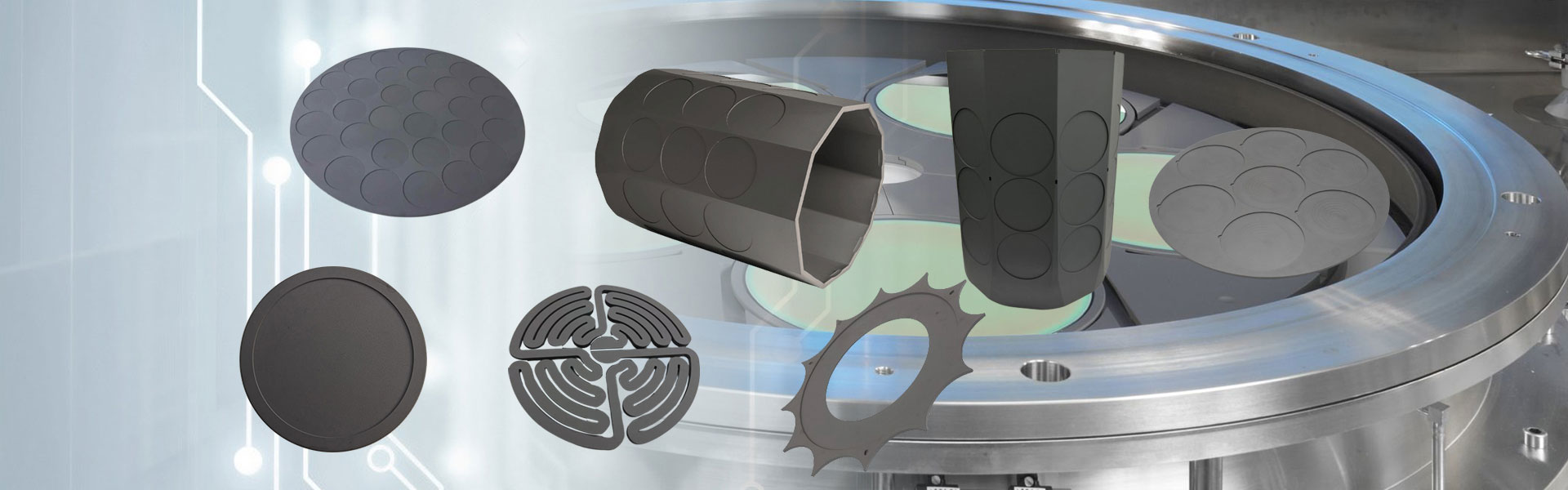
Kiina Isostaattinen grafiitti Valmistajat, toimittajat, tehdas
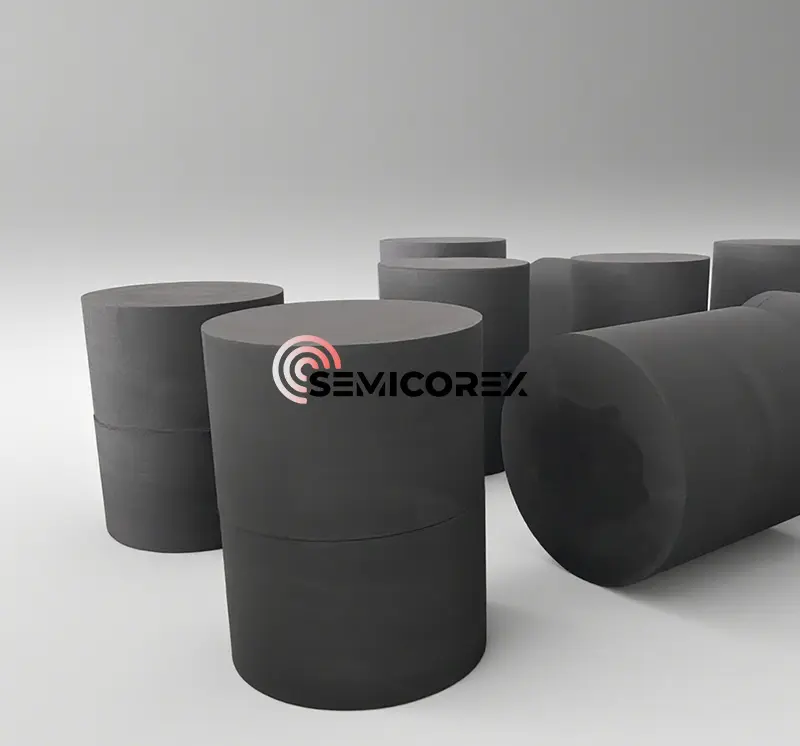
Carbon/graphite material molding essentially involves increasing the density of the powder mixture and ensuring close contact between the aggregate and binder to produce a green body with a desired size, morphology, and minimal machining allowance. The four main molding methods are extrusion, compression molding, vibration molding, and isostatic pressing. Common carbon/graphite materials on the market (for example, charcoal used for household fires) are mostly formed using hot extrusion and compression molding (cold or hot). Isostatic pressing offers superior molding performance.
The principle of isostatic pressing is based on Pascal's law: pressure applied to a medium (liquid or gas) in a sealed container is uniformly distributed in all directions, with the pressure on the surface being proportional to the surface area. Isostatic pressing involves placing a sample, enclosed in a sealed container, within a high-pressure cylinder. Leveraging the incompressible nature of the liquid medium and its ability to uniformly transmit pressure, the sample is uniformly pressed from all directions. When the fluid is injected into the cylinder, the pressure is evenly transmitted in all directions according to the principles of fluid mechanics. The sample in the cylinder is then subjected to uniform pressure in all directions.
Due to the isostatic pressing method, isostatically pressed graphite exhibits excellent isotropy, with properties independent of shape, size, or sampling direction. The material possesses a dense microstructure, high mechanical strength, high surface hardness, and oxidation resistance. Strong performance and high-temperature resistance; the material has excellent thermal shock resistance and is less susceptible to cracking under rapid cooling and heating conditions.
1. Isotropy
Different molding methods result in different properties in different directions. This is primarily reflected in resistivity, thermal conductivity, mechanical properties, and thermal expansion coefficient. The general measurement method is to sample the product perpendicular to and horizontally from the pressure surface, measure the properties separately, and then divide the smallest value by the largest value to obtain the isotropy ratio.
Traditional carbon/graphite products exhibit significant anisotropy, i.e., the properties of the product are different in the directions perpendicular to and horizontal to the pressure surface. The corresponding difference in performance is generally greater than 1:1.1, hence the term anisotropy. In many cases, this difference is fully exploited, and the greater the difference, the better. Examples include graphite electrodes for steelmaking and brushes for motors. Many applications, such as EDM and single-crystal silicon thermal field applications, increasingly require carbon/graphite products to exhibit isotropy (with an orientation ratio within the 1:1.05 range).
2. Large Dimensions
The market is increasingly demanding larger product sizes. For example, single-crystal silicon products have grown from 6- and 8-inch sizes to 12-inch sizes. The size of graphite materials used in thermal fields is also increasing. This is also increasing. Similar trends are seen in other related industries. Graphite for EDM, continuous casting, and nuclear reactors also requires large-scale products. This is difficult to achieve using molding and extrusion methods. The primary problem with large-scale product production is calcination cracking, and the larger the product, the higher the chance of calcination cracking.
3. Fine Structure
As a structural material, it requires high physical and chemical properties. On the one hand, the finer the particle size of the carbon particles that make up the carbon/graphite material, the denser its texture and the higher its mechanical strength.
Isostatically pressed graphite is widely used in semiconductor manufacturing processes. It is used in graphite components for the hot zone of single crystal growth furnaces, such as crucibles, heaters, flow guides, and insulation covers; and in graphite components used in epitaxial processes.


- View as

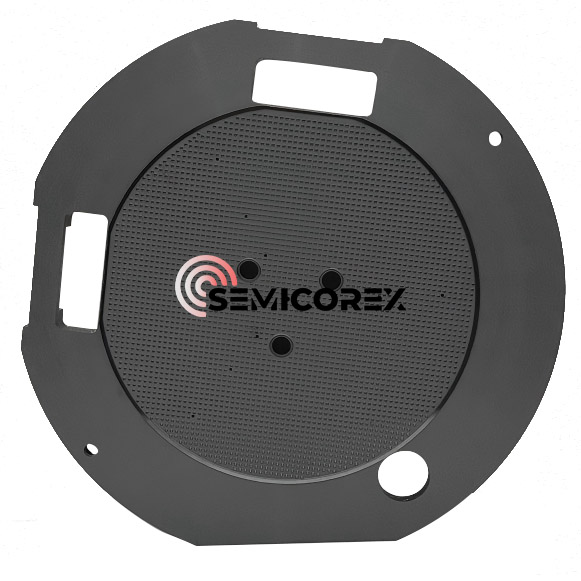
Kolmiosaiset grafiittiupokkaat
Kolmiosaiset Semicorex-grafiittiupokkaat ovat tehokkaita jaettuja grafiittisäiliöitä, jotka on erityisesti suunniteltu yksikiteisen piin kasvatusprosesseihin. Ihanteellinen huippuluokan puolijohteiden lämpökäsittelyyn, Semicorex-kolmiosainen grafiittiupokas voi luotettavasti tukea kvartsiupokasta ja sen sisäisiä materiaaleja saavuttaakseen yksikiderakenteiden hallitun kasvun.
Lue lisääLähetä kysely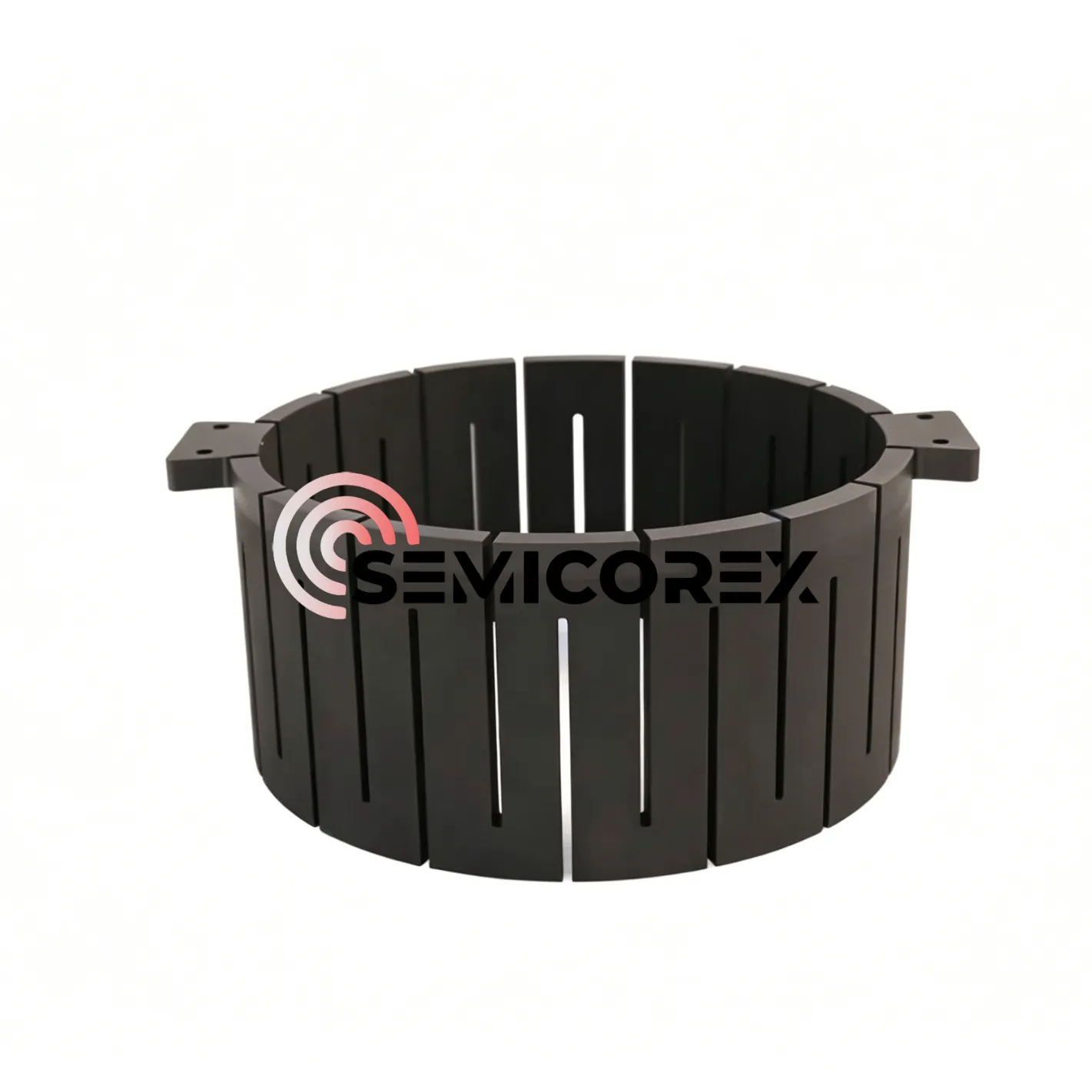
Sleeve-tyyppiset grafiittilämmittimet
Semicorex-hihatyyppiset grafiittilämmittimet, tehokkaat lämmityselementit, joita käytetään laajalti yksikiteisissä kasvuuuneissa. Semicorex-holkkityyppiset grafiittilämmittimet ovat tärkeitä lämmityskomponentteja, joita käytetään laajasti yksikideuuneissa, ja ne on suunniteltu erityisesti korkealaatuisen monokiteisen piin kasvattamiseen. Valitsemalla Semicorexin valitaan ihanteelliset lämpökäsittelyratkaisut.
Lue lisääLähetä kysely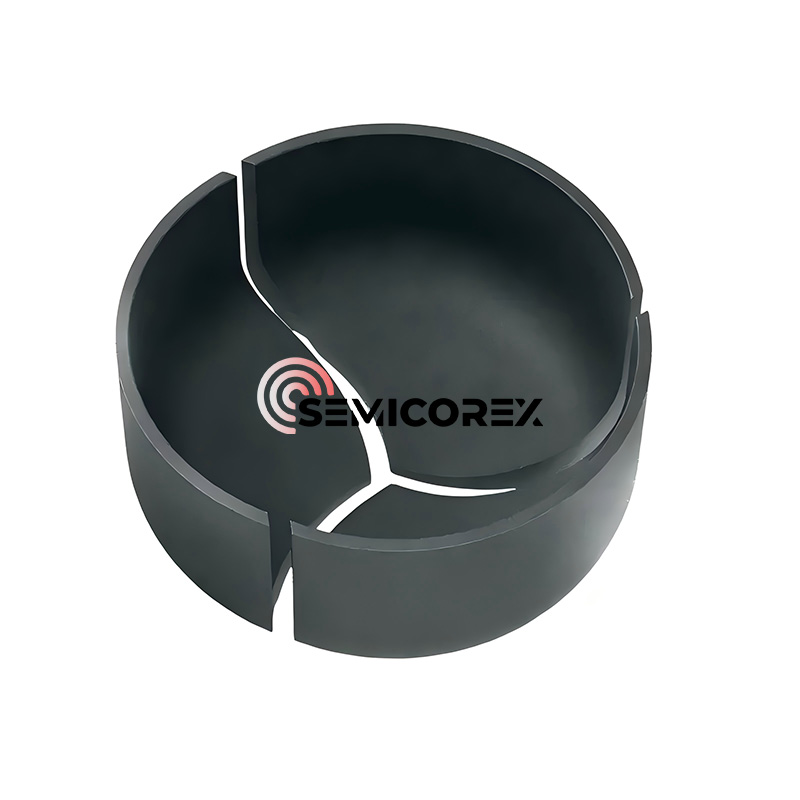
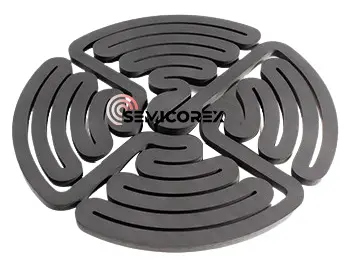
Kolmiteräinen grafiittiupokas
Semicorex-korkeapuhtaus kolmen terälehtisen grafiittiupokkaassa on innovatiivinen jännitystä lieventävä arkkitehtuuri, joka on suunniteltu maksimoimaan kiteiden kasvusaanto äärimmäisissä puolijohteiden lämpöympäristöissä. Semicorex toimittaa maailmanluokan puolijohdemateriaaliratkaisuja maailmanlaajuisesti ja antaa edistyneille teollisuudenaloille tarkkuussuunniteltuja grafiitti- ja keraamisia komponentteja, joita tukee luotettava globaali logistiikka.*
Lue lisääLähetä kysely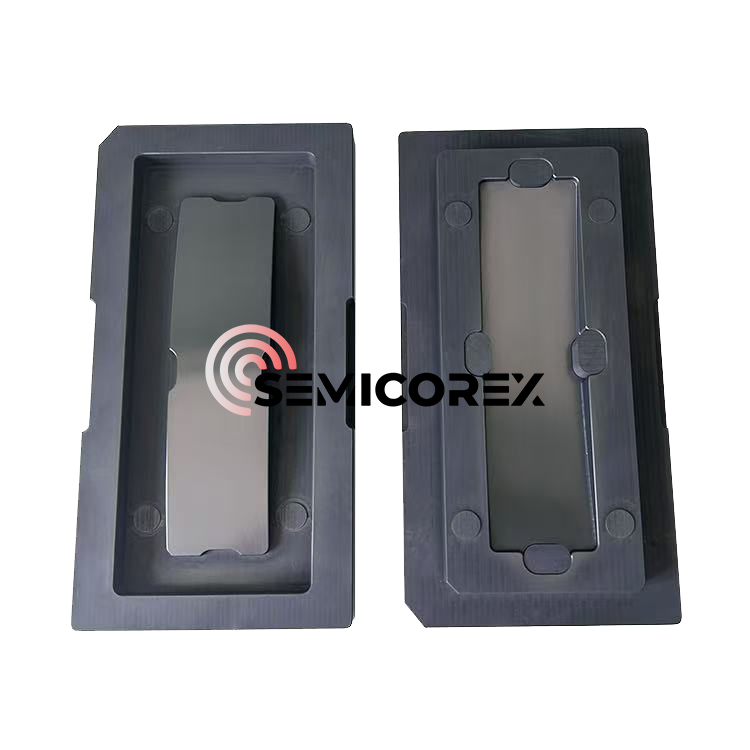
Kuumataivutettu lasigrafiittimuotti
Semicorex kuumataivutettu lasigrafiittimuotti on tarkasti suunniteltu hienorakeisesta, erittäin puhtaasta grafiitista, joka tarjoaa poikkeuksellisen korkean lämpötilan kestävyyden, lämpöshokkivakauden, itsevoitelun ja kemiallisen kestävyyden, mikä takaa korkealaatuisen 3D-kaarevan lasin minimaalisilla vioilla. Semicorex on valittu sen syvän asiantuntemuksen, edistyneen muottisuunnittelun ja huolellisen prosessinhallinnan vuoksi, mikä maksimoi tehokkaasti tuoton ja täyttää vaativimmatkin tuotantovaatimukset.*
Lue lisääLähetä kysely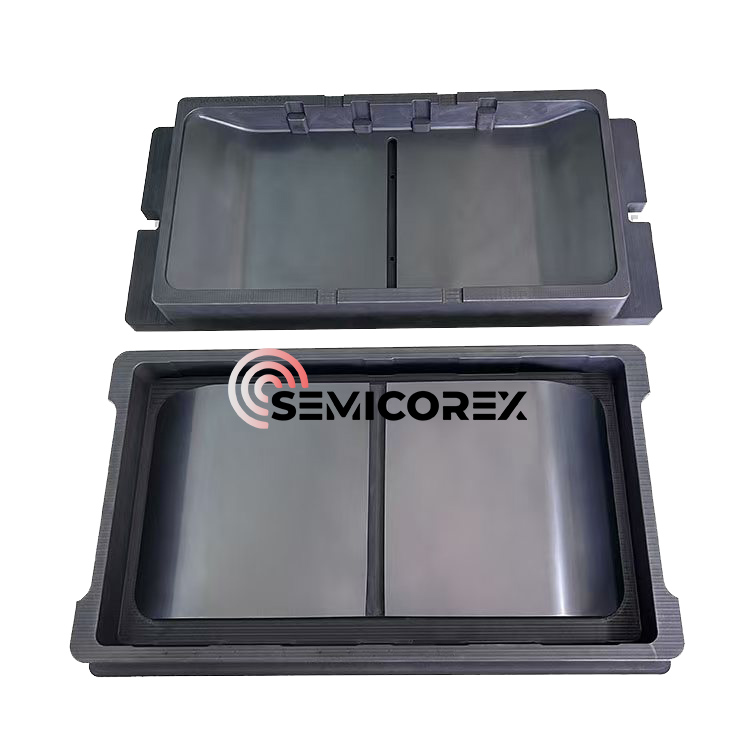
3D kuumataivuttava lasigrafiittimuotti
Semicorex 3D Hot Bending Glass Graphite Mold on korkealuokkainen isostaattinen grafiittimuotti, joka on suunniteltu kuumataivutettavaksi 3D-kaarevalle lasille, joka tarjoaa erinomaisen lämmönkestävyyden, lämmönjohtavuuden, kulumisen ja korroosionkestävyyden, parantaa lasin pinnan laatua, pidentää muotin käyttöikää ja lisää merkittävästi tuotannon tehokkuutta ja tuottoa. Semicorex on valittu sen luotettavan laadun, yhtenäisen toimituksen ja asiantuntemuksensa vuoksi edistyneiden grafiittiratkaisujen tarjoamisessa maailmanlaajuisesti.*
Lue lisääLähetä kysely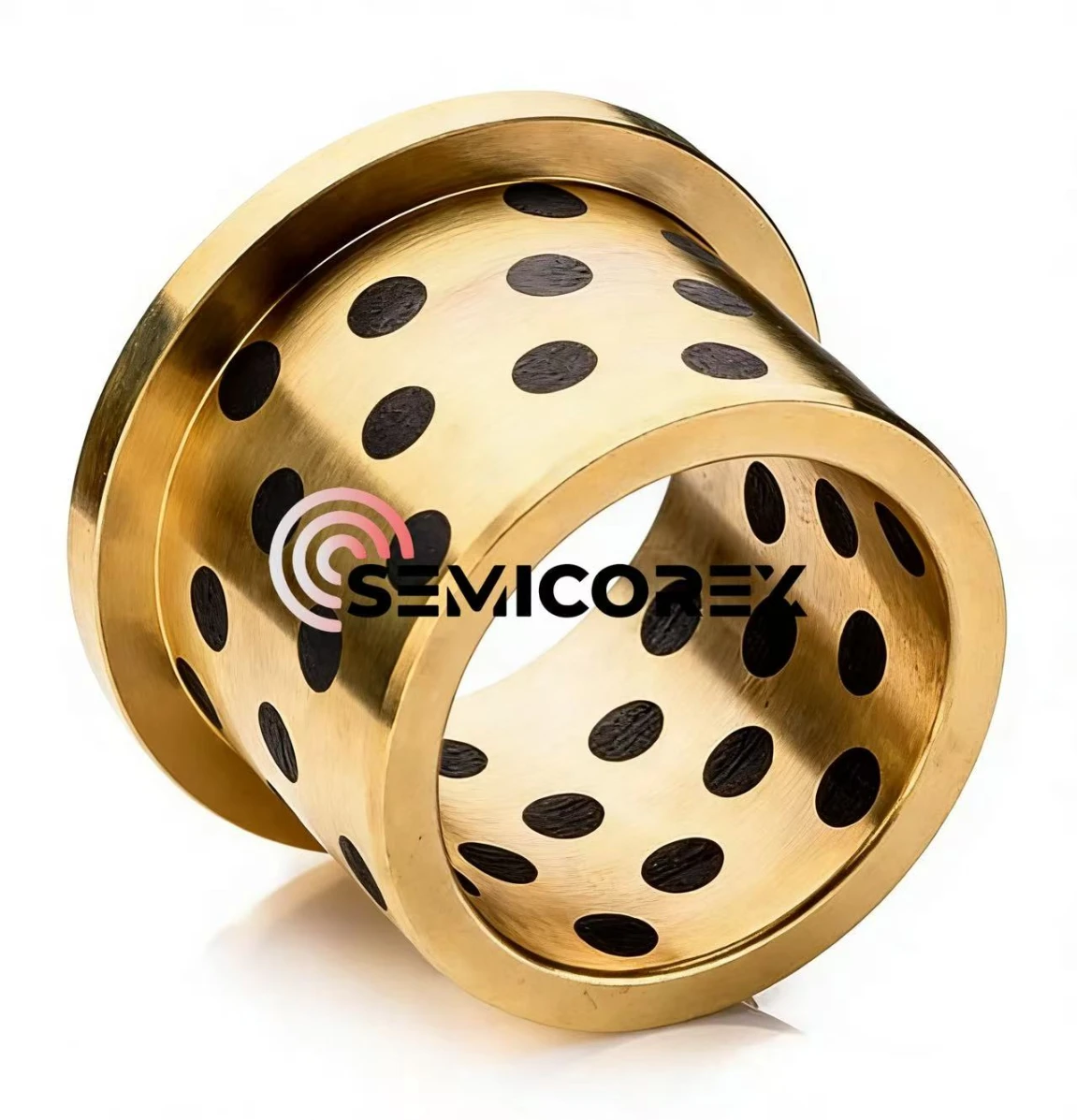
Grafiittiset itsevoitelevat holkit
Semicorex-grafiittiset itsevoitelevat holkit, joita kutsutaan myös öljyttömiksi holkeiksi, ovat korkean suorituskyvyn liukulaakerikomponentteja, jotka on suunniteltu erityisesti toimimaan ilman ulkoista voitelua tai öljynsyöttöä. Semicorex-grafiittiset itsevoitelevat holkit ovat erinomaisia ratkaisuja laitteille, jotka toimivat monimutkaisissa ympäristöissä, mukaan lukien öljytön käyttö, korkeat lämpötilat, suuret kuormitukset, alhaiset nopeudet, likaantumisenesto, korroosionkestävyys ja säteilynkestävyys.
Lue lisääLähetä kysely
Semicorex on tuottanut Isostaattinen grafiitti useiden vuosien ajan ja on yksi ammattimaisista Isostaattinen grafiitti valmistajista ja toimittajista Kiinassa. Kun ostat edistyksellisiä ja kestäviä tuotteitamme, jotka toimittavat irtopakkauksen, takaamme suuren määrän nopean toimituksen. Olemme vuosien varrella tarjonneet asiakkaillemme räätälöityä palvelua. Asiakkaat ovat tyytyväisiä tuotteisiimme ja erinomaiseen palveluumme. Odotamme vilpittömästi, että pääsemme luotettavaksi pitkäaikaiseksi liikekumppaniksesi! Tervetuloa ostamaan tuotteita tehtaaltamme.